

CVV Number: What Is It? Does That Matter?
You must have heard that there should be a secret sharer who will know everything about you; but there are certain factors which you have to keep as top secret from all. It’s because of the safety of your hard-earned money. And to protect your savings from going to any wrong hands, the ‘not-to-reveal’ factor is your CVV code.
Yes, here, we are talking about that 3-digit (sometimes 4) code that you are asked to enter during online transactions using your Credit/Debit cum ATM card. As per a recent study, there are 38 million credit card users and 945 million debit card users in India; however, very few understand CVV. People often face a dilemma every time they see the message “Please enter the CVV” during online transactions, do you feel the same? Let's clear that confusion.
We understand your concerns and here, we will answer all your queries regarding CVV.
What is CVV Number in Credit/Debit Card?
Let us begin with the full form of CVV – the abbreviation CVV stands for "Card Verification Value". CVV means the 3–4-digit unique numeric code assigned to each card by the card provider.
Thinking can CVV be 4 digits? Check the next section and understand:
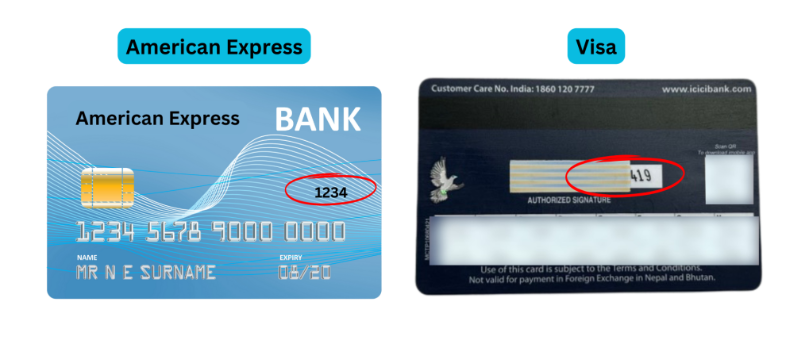
Where Is the CVV Located on a Debit or Debit Card?
| Card provider | Number of Digits on CVV | Where to find CVV Number |
|---|---|---|
| Rupay, Mastercard, Visa, and Discover | 3 | Backside of the card (near the signature line) |
| American Express | 4 | Frontside of the card |
How Is A CVV Number Generated?
Issuing banks generate the CVVs based on
- Card number
- Card expiry date
- Service code
- Unique code of the bank
It means that forging CVV number is not possible through your card details.
CVC, CSC, CIN, CVD, CSC – Serving the Same Under Different Names
Now, let’s check out some variations of CVV in the table below:
| Security code | Full form | Vendors |
|---|---|---|
| CVC/CVC2 | Card verification/validation code | MasterCard |
| CSC | Card Security Code | American Express |
| CIN/CID | Card Identification Number | American Express and Discover |
| CVD | Card Verification Data | Discover |
| CSC | Card Security Code | American Express |
RuPay and Visa cards mostly come with a CVV or a CVV2 code; however, all these serve the same purpose.
What Does A CVV Number Contain?
The components of CVV Number are:
A magnetic strip
The magnetic strip contains unique information about the card – magnetic reader reads this stripe when you swipe any card through it to authenticate the card. This strip hides the initial digits of the CVV.
A 3-4 digit number
It is the visible 3-4 digits after the strip which we call the CVV code. This set of numbers makes online transactions ultra-secure.
Wondering what does the CVV actually do? Jump to the next section:
What Is the Purpose of CVV?
CVV is a guard to the money in your account against any fraudulent activities. It ensures that anyone who knows the card number, expiry date, and account holder’s name cannot make the online transaction.
Only the person having the card or remembering the CVV can enter this by checking it. And after this step, PIN or OTP (sent to the registered mobile number) will be asked to make the payment. So, online payment through card is like a multi-layer security system to prevent fraud and CVV stands as the second layer of this system.
While making offline payments through cards,
- The cardholder manually inserts the card
- The machine automatically reads the CVV
- On entering secret PIN, the amount gets withdrawn
Key Takeaway:
- CVV is not at all required for offline transactions – beware if you are asked to do so
Why Are You Asked to Enter the CVV?
Well, a cardholder is asked to enter the CVV only when they are making any online transaction using their cards. Before asking the CVV, the card details like the card number, expiry day, and cardholder name are asked.
After that, CVV is asked to verify whether you own the card or somehow came across the other details of it.
When Should You Share Your CVV and When Shouldn’t?
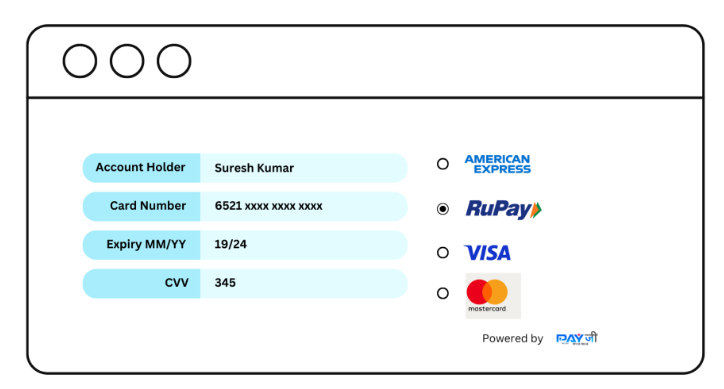
Any transaction done through a card will need a CVV – be it online or offline. During the offline transaction, the machine reads it automatically from the magnetic strip.
However, during online transactions, you will see that you need to enter CVV after entering the card number and expiry day, to process the transaction. This is where you have to manually enter the CVV.
How Safe the CVV Itself Is?
CVVs are safe until someone has cloned the card along with its magnetic strip. Online payment gateways cannot save your CVV as it is against Per Payment Card Industry Data Security Standards. You can save all your card details on the payment portal of any app or website; however you cannot save CVV. You have to enter it everytime you want to transact using a card. Therefore, payment portals do not save your CVVs during online transactions. Just like that during card swipes, the machines do not save CVVs.
Relax, fraudsters will have no access to your CVV during card swipes or online transactions. Incorrect CVV cancels the card authorization, thereby, there will be no transaction. So, there will be minimum chances of card misusing with CVVs.
CVV Vs Card PIN
PIN is at the third protection layer whereas CVV is at the second layer. The basic differences between PIN and CVV are
- PINs are changeable – you have to change the PIN after your card is active (your banks will instruct you to do so for the first time, and it is safe). But CVV is not changeable.
- PIN helps in the transaction itself whereas CVV helps in card verification purposes.
- On entering the wrong PIN, there will be no transaction at all; however, the wrong CVV will pause the authentication process itself which will again result in no transaction.
Online CVV Number Checking – Is That For REAL?
Finding out how to know the CVV number on a credit/debit card online? Well, it’s not that difficult! In case you have a virtual card, you can find the CVV code online.
Want A Power-packed Security for Your CVV? Quick Tips to Protect Your CVV
Let’s now uncover some secret tips to protect your CVV and other details of your card:
- Beware of phishing activities
- Never disclose your CVV to anyone
- Do not share any of your card details on the unidentified sites
- Never click on any attachments from unknown sources
- Browse only the secure sites (Check HTTPS)
- Monitor your bank e-statement daily for suspicious activities
- Try not to save your card details on any site
End words
India Times reports that card and internet banking fraud cases have a remarkable drop of almost 5,000 incidents in FY22 compared to FY21. So, we can proudly say that it is a result of increasing awareness among us. It is definitely an achievement for us, Indians. We hope that our article too helps you in gaining some knowledge on card CVV and its protection. Now, it’s time for you to spread awareness and save your loved ones from monetary loss by sharing this article.